
The Emsella Chair Toronto Kegel Chair
A Noninvasive Treatment For Stress Incontinence
The involuntary leakage of urine, known as urinary incontinence, affects women of all ages and body types. In fact, up to 40% of women over age 30 experience some lack of control, affecting their confidence and sense of self. The Emsella Chair allows you to regain control and improve your quality of life, without surgery, discomfort, or medications.
What is The Emsella Chair?
The Emsella Chair is the first FDA and Health Canada approved device of its kind for the treatment of female and male urinary incontinence. It is suitable for men and women of any age. Whether you've developed urinary incontinence with age, or following childbirth or menopause, this treatment option is safe and effective.
The Emsella Chair uses noninvasive HIFEM, which stands for High-Intensity Focused Electromagnetic energy, to produce supramaximal contractions of the pelvic floor muscles — the equivalent of 11,000 Kegels in 28 minutes! This results in strengthening and increased tone of the pelvic floor muscles and decreases episodes of incontinence.
You've probably heard about Kegel exercises before. Kegels are performed by contracting the pelvic floor muscles, those responsible for stopping the flow of urine. Doing them regularly can strengthen the pelvic floor, enabling you to address incontinence. But can you do over 11,000 in just under 30 minutes?
Who is a Candidate for The Emsella Chair?
If you experience leakage when coughing, sneezing, laughing or performing strenuous physical activities, then you may suffer from urinary incontinence.
The Emsella Chair delivers noninvasive electromagnetic energy to all of the muscles in the pelvic floor in order to strengthen and restore their neuromuscular function.
- Treatments are comfortable.
All you'll feel during your treatment is your pelvic floor muscles involuntarily contracting. - There is absolutely no downtime.
You can get back to daily activities immediately after your session. - Results are evident within 3 weeks.
Regain control of your bladder in under a month!
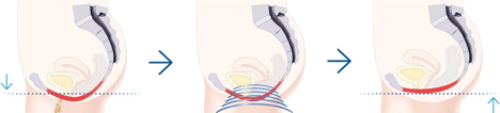
- Weak pelvic floor muscles provide poor support to pelvic organs, resulting in incontinence.
- The Emsella Chair treatments strengthen the entire pelvic floor.
- Increased tone of the pelvic floor muscles provides support to pelvic organs and reduces incontinence.
Non-Invasive Strengthening
Builds pelvic floor muscles electromagnetically for improved bladder control without surgery or downtime.
Quick
A sessions takes only 28 minutes.
Wear Your Regular Clothes
All you have to do is sit on a chair without changing out of your regular clothes.
Who is The Emsella Chair For?
The Emsella Chair is designed for men and women who suffer from urinary incontinence.
Urinary incontinence is more common in women following childbirth and menopause, due to weakening of the pelvic floor. The pelvic floor is a network of muscles which form a sling-like support for the lower pelvic organs.
Many clinical studies support the effectiveness of the Emsella Chair for treatment of urinary incontinence. The reported patient satisfaction rate is 95%. In one study, 50% of participants reported complete resolution of their incontinence.
An additional clinical study evaluated improvements in female sexual function following treatment with the Emsella chair and 100% of study participants reported improvement at 3 months (which is why it’s also known as the ‘orgasm throne’, ladies).
Sign up to win free products & treatments every month
Take control of your look
Our Comprehensive Approach to The Emsella Chair
Prior to beginning your treatments, you’ll meet with one of our board-certified dermatologists for a consultation and assessment to determine whether The Emsella Chair is right for you.
The treatment is very easy. All you'll need to do is sit in the specialized chair. We recommend wearing leggings or a similar item of clothing made of a flexible material and without metal buttons.
Each session lasts about 30 minutes and you may resume normal activities immediately following the treatment. During the treatment you feel intense but comfortable contractions of your pelvic floor muscles.
Treatment consists of two sessions per week for three weeks, for a total of 6 sessions. It is very important to complete your first 6 sessions without interruption for optimal results.
For most people, a dramatic improvement in control can be seen in three weeks. Results can be prolonged with maintenance treatments.
Why Urinary Incontinence Happens: Understanding Pelvic Floor Weakness
If you're experiencing urinary incontinence, you're far from alone. Many women and men feel embarrassed discussing the condition, which often delays seeking treatment. Understanding why the pelvic floor weakens is the first step toward recognizing that incontinence is a treatable medical condition, not a permanent part of aging.
The Pelvic Floor: Your Body's Support System
The pelvic floor is made up of muscles, ligaments, and connective tissues that create a supportive sling beneath the pelvic organs, which include the bladder, uterus (in females), and prostate (in males). It plays a crucial supportive role to ensure continence. The muscles, in particular, contract to prevent leaks and relax to facilitate bladder function. When these muscles weaken, their ability to support their functions decreases, resulting in potential leakage issues.
Why the Pelvic Floor Weakens: Primary Causes
Childbirth and Pregnancy
Pregnancy and vaginal birth can put considerable strain on the pelvic floor muscles. Throughout pregnancy, the increasing weight of the baby exerts downward pressure on the pelvic muscles through term. During labour, these muscles undergo significant stretching to facilitate childbirth. While many women find that their pelvic floor muscles recover post-delivery, others may experience ongoing weakness, especially after multiple births or difficult deliveries. This contributes to the notable prevalence of urinary incontinence in women who have given birth, making it one of the most common causes of pelvic floor dysfunction.
Hormonal Changes and Menopause
Estrogen is essential for preserving the flexibility and strength of the pelvic floor muscles, as well as the tissues around the bladder. During menopause, as estrogen levels drop, these tissues can become thinner and less resilient. This decrease in hormone levels typically happens gradually over several years, leading many women to first experience symptoms of incontinence in their late 40s or 50s. Fortunately, these hormonal changes can be addressed with appropriate treatment, making Emsella therapy a promising option for menopausal women who are facing new instances of incontinence.
Aging and Muscle Deconditioning
As people get older, muscles tend to diminish in size and power through a condition known as sarcopenia. Pelvic floor muscles follow the same pattern. Lacking consistent exercise, these muscles steadily lose tone, which hampers their role in supporting the organs in the pelvis and preserving urinary control. This age-related decline is why incontinence becomes increasingly common with each decade of life. However, muscle weakness is not inevitable; it's preventable and reversible through targeted strengthening.
High-Impact Exercise and Activities
Ironically, intense physical activity without adequate pelvic floor support can contribute to weakness. High-impact exercises that involve running and jumping can place significant impact forces on the pelvic floor. For people with pre-existing weakness, these activities can worsen incontinence. This creates a frustrating cycle where people with incontinence may avoid exercise, leading to deconditioning and further muscle weakening. This is why pelvic floor strengthening through Emsella can be liberating. It allows people to return to activities they love without leakage concerns.
The Psychology of Pelvic Floor Weakness
It's important to recognize that pelvic floor dysfunction often creates a negative feedback loop. As incontinence worsens, many people reduce their activity levels and decrease exercise. This inactivity further weakens the pelvic floor, making incontinence more pronounced. Additionally, stress and anxiety about incontinence can increase symptoms, a phenomenon supported by research showing that relaxation techniques improve continence. Breaking this cycle requires both physical intervention and psychological support.
Why Traditional Kegels Often Fall Short
Many people perform Kegels incorrectly, using the wrong muscles or with insufficient intensity. Additionally, severely weakened muscles sometimes lack the neuromuscular awareness to contract effectively. This is where Emsella technology excels. It eliminates the need for conscious muscle control, providing strong contractions that help strengthen weak muscles, whether a person can contract their muscles voluntarily or not.
The key takeaway is this: pelvic floor weakness is not a character flaw or an inevitable consequence of aging. It's a treatable condition with identifiable causes. Whether your incontinence developed after childbirth, during menopause or simply from aging, the underlying mechanism is the same: weakened muscles need to be strengthened.
The encouraging news? Pelvic floor muscles respond remarkably well to targeted strengthening. Unlike many age-related changes, weakened pelvic floor muscles can regain significant strength and function within weeks of appropriate treatment.
At Compass Dermatology, we recognize that addressing incontinence requires understanding its root causes. During your consultation, we will discuss which factors may have contributed to your pelvic floor weakness. This information helps us tailor your Emsella treatment plan.
Patients often describe the Emsella Chair sensation as a series of intense, rhythmic tingling or buzzing in the pelvic region, kind of like rapid muscle twitches during a workout. As the high-intensity focused electromagnetic (HIFEM) energy activates, you feel involuntary contractions building gradually, starting subtly and escalating to strong, supramaximal squeezes that mimic thousands of Kegels. You won't feel any numbness, heat or pain; just a controlled, pulsing workout for the pelvic floor. Sessions end with mild relaxation, and most resume activities immediately.
The Emsella Chair FAQ
What is The Emsella Chair treatment?
The Emsella Chair is a noninvasive High-Intensity-Focused Electromagnetic energy (HIFEM) technology designed for the treatment of urinary incontinence.
How long do results from The Emsella Chair last?
What does The Emsella Chair feel like?
What can I do to stop urine leakage?
Urinary stress incontinence is a condition that can be treated by improving the strength of the pelvic floor muscles. The Emsella Chair delivers energy to involuntarily contract the pelvic floor muscles, thereby strengthening them.
How do you sit on an The Emsella Chair?
Is The Emsella Chair FDA and Health Canada approved?
In the Media













650 Mount Pleasant Rd #8
Toronto, ON M4S 2N5, Canada
Phone: 647-351-9277
Fax: 647-351-9077
Get social